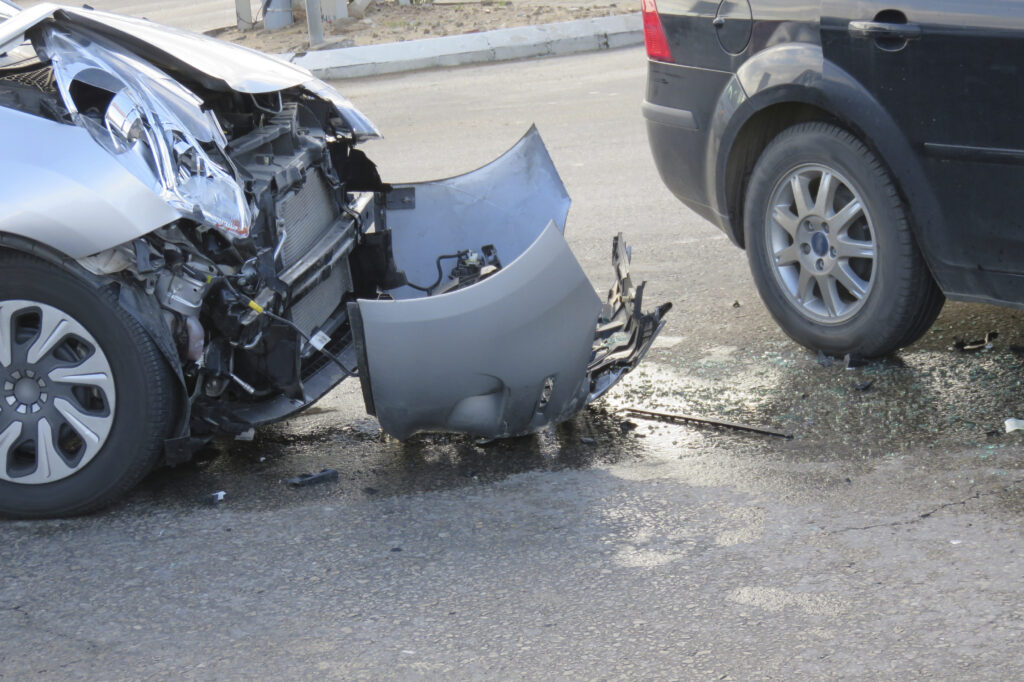

Advances in technology have made driving safer. Over the past few decades, safety innovations like antilock braking systems and electronic stability control have become standard in cars sold in the U.S. The next generation of safety systems will likely incorporate technologies such as artificial intelligence and autonomous driving.
Adaptive cruise control is one of the technologies that could improve both safety and the driving experience. However, drivers should understand how it works to avoid misuse and malfunctions that can lead to car accidents.
How Adaptive Cruise Control Works
Adaptive cruise control is an advanced form of cruise control. In a conventional cruise control system, the driver sets the desired speed. The control system uses the throttle, transmission, and, in some cases, the brakes to maintain the user’s settings.
Even conventional cruise control systems have evolved. Older systems simply maintained the throttle position, resulting in vehicle acceleration when going downhill and deceleration when going uphill.
Newer systems controlled the transmission in addition to the throttle. The control system could downshift when going downhill, slowing the car down due to engine braking. Similarly, the control system could downshift when going uphill to provide additional power to the wheels to maintain speed.
Issues With Conventional Cruise Control
The downside of conventional cruise control is that it relies on the driver to monitor and maintain the following distance. As the car maintains its speed, it can rear-end a slower-moving vehicle. Thus, the driver must react as the vehicle approaches other cars and manually engage the brake.
However, it only makes sense that drivers must pay attention while driving, even when using cruise control. If an inattentive or distracted driver collides with a slower-moving vehicle while using their cruise control, an insurance company or jury might reasonably find that they acted negligently.
How Adaptive Cruise Control Differs from Conventional Cruise Control
Adaptive cruise control adds a frontal sensor to conventional cruise control. This sensor monitors the distance to the vehicle ahead. If the following distance falls below a programmed threshold, the adaptive cruise control slows the vehicle to maintain or increase the spacing.
This means the sensor reading collected by the adaptive cruise control can overrule the speed setting. For example, if the following distance is shrinking too quickly at the speed set by the user, the cruise control will slow the vehicle and maintain a speed lower than the user’s setting.
Is Adaptive Cruise Control Safe?
When used correctly, adaptive cruise control may be safer than conventional cruise control. By monitoring the following distance, adaptive cruise control can reduce the odds of a rear-end collision.
However, adaptive cruise control cannot solve all problems. Although it can slow a vehicle to maintain following distance, it is not designed to apply emergency braking when the cruise control is inactive. Similarly, it might not bring your vehicle to a full stop when it encounters a stopped vehicle or a fixed object, like a concrete barrier.
How Adaptive Cruise Control Can Go Wrong
In addition to the limitations of adaptive cruise control, drivers should be aware of the ways that adaptive cruise control can actively go wrong. Like all forms of vehicle automation, drivers may misuse it by exceeding its capabilities.
Drivers can treat adaptive cruise control as a form of driverless technology. However, since adaptive cruise control systems do not control the steering or sense the vehicle’s location in a lane or on the road, the driver must pay attention and maintain control of the vehicle. A driver who fails to do so will inevitably cause crashes.
Adaptive cruise control can also malfunction. When these systems fail, they may fail to maintain the speed or distance as programmed.
Contact the Atlanta Car Accident Lawyers at Rafi Law Firm for a Free Consultation
Although cars are safer than ever before, crashes still happen even when technologies like adaptive cruise control are used. Driver negligence, vehicle malfunctions, and misuse can still create the conditions for collisions. Thus, these systems can significantly improve vehicle safety, but only when they are used properly with their limitations in mind.
If you believe your collision involved adaptive cruise control, it is important to seek legal help. Rafi Law Firm can help you navigate the personal injury claims process while you focus on healing. Contact our law offices today for a free consultation with an Atlanta car accident lawyer.
We proudly serve clients throughout Fulton County and the greater Atlanta metro area in Georgia.
Rafi Law Firm – Atlanta
1776 Peachtree St NW UNIT 423, Atlanta, GA 30309
(404) 800-9933